Resilience in Practice: A New Category
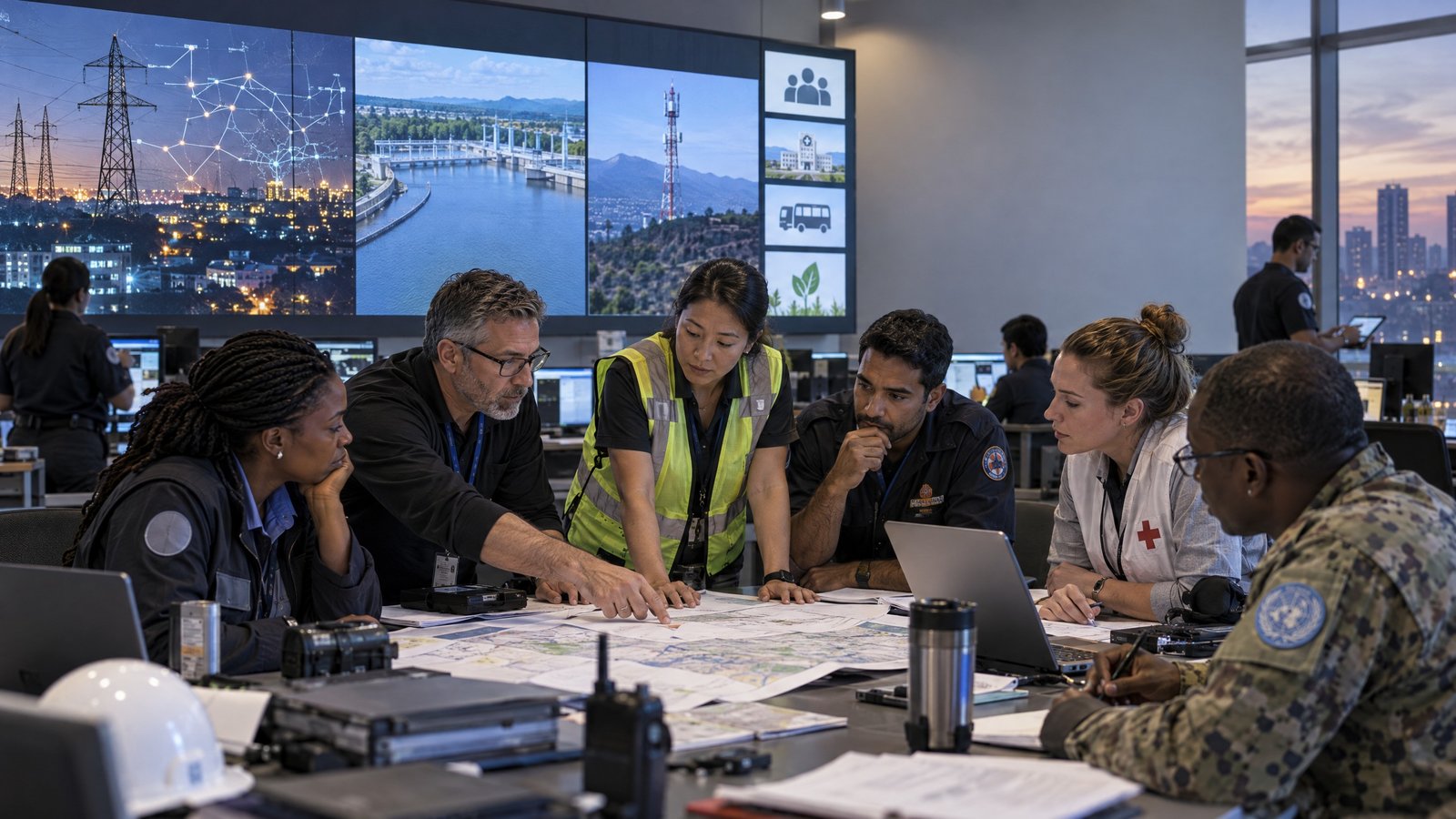
The word resilience is used widely in discussions about disasters, infrastructure and humanitarian action. It can describe the strength of a power system, the adaptability of a public service or the ability of an organisation to continue making sound decisions under pressure.
This website is introducing a new Resilience category to examine those practical questions in more detail.
The category will focus on how essential systems continue to operate when conditions become difficult. That includes the technologies that support emergency communications, energy and water services, public-health operations, information management and humanitarian logistics. It also includes the less visible work around those systems: maintenance, training, governance, interoperability and the capacity to adapt when an original plan no longer fits the situation.
The emphasis will be on resilience as a shared and institutional concern, not as an individual survival project. A resilient service is not simply one that withstands disruption. It is one that can degrade safely, preserve its most important functions, learn from experience and recover in a way that reduces future vulnerability.
Future articles will look at field deployments, technical choices and operational lessons from disaster response and humanitarian aid. They will ask practical questions: Who operates the system? What happens when power or connectivity is limited? Can local teams maintain it? Does it work across organisational boundaries? And does the technology strengthen the wider service, or add another fragile layer?
The category will bring together technical analysis and real-world examples, with attention to both capability and context. Resilience depends on more than equipment. It is shaped by the relationships between infrastructure, institutions, communities and the people who keep essential services running.
You can follow this work in the Resilience category. The aim is to build a useful collection for readers interested in disaster technology, humanitarian operations and the long-term task of making critical systems more adaptable.
